
Blog
Can You Cook With Distilled Water?
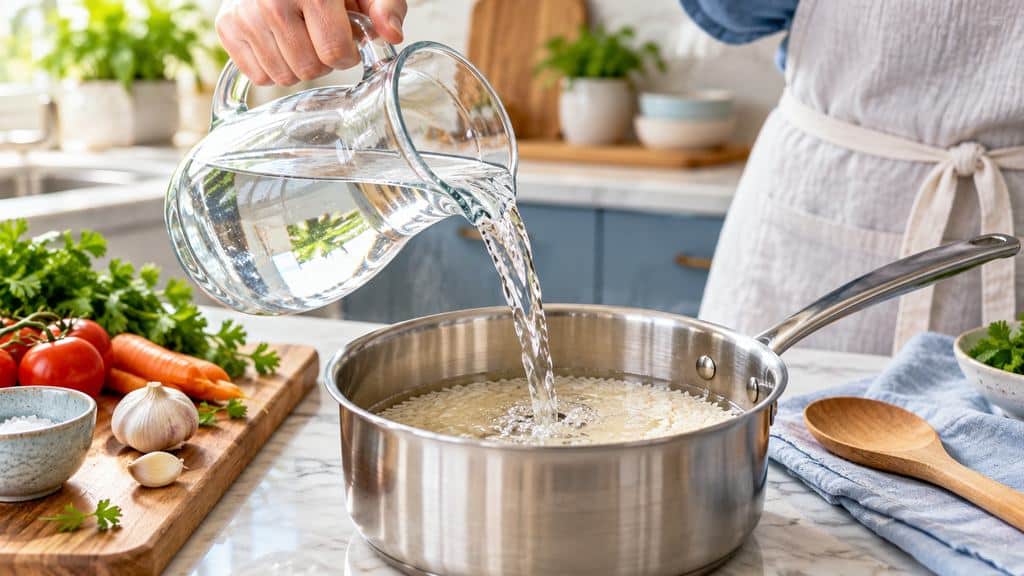
Many people keep distilled water at home and later ask, "Can you cook with distilled water?" The answer is yes, and it is safe for everyday meals. It does not leave white scale in your kettle, and it does not add any mineral taste to your food. The only downside is taste. Distilled water has almost no minerals, so soup, coffee, and tea may taste a little flat. In this guide, Tahoe Springs Water explains what changes when you use distilled water in the kitchen, what stays the same, and which water is best for each job.
What Is Distilled Water?
Distilled water is water that has been boiled into steam and then cooled back into liquid. Most minerals and impurities stay behind, so what is left is very clean water with almost nothing mixed in. Under the FDA's bottled water rules, water made this way can be sold as "distilled water." It is safe to drink and safe to cook with.
The main difference from spring water or tap water is that it has almost no calcium or magnesium, and these minerals are a big part of how water tastes. Distilled water is one kind of purified water. To see how it compares with the other kinds, read our guide to the different types of purified water.
Should You Cook With Distilled Water?
Yes, you can use distilled water to cook with. It works just like any other clean drinking water. Food cooks the same way no matter which water is in the pot. You may notice a small change in taste, but in most dishes it goes away once you add salt and seasoning.
When To Use Distilled Water In Cooking
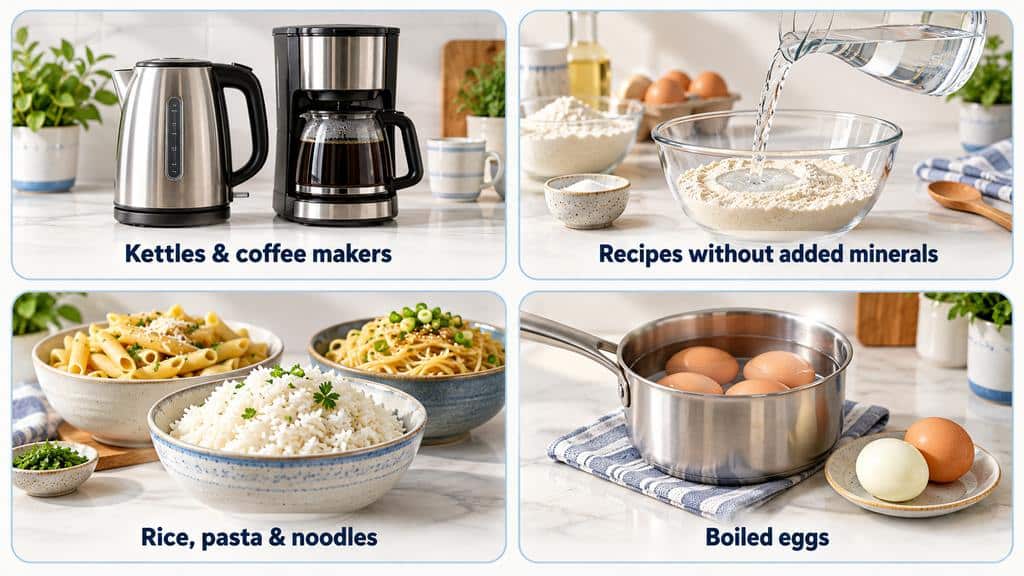
You do not need distilled water for every meal, but it helps with some kitchen tasks. It is most useful when hard water causes white scale or when you want full control over flavor. Here are the main uses of distilled water in cooking:
Use | Why Distilled Water Works |
Kettles and coffee makers | Helps stop white scale from building up inside electric kettles, coffee makers, rice cookers, and steam ovens |
Recipes with no added minerals | Nothing in the water changes the taste of the dish |
Rice, pasta, and noodles | These foods soak up salt and sauce, so they cook and taste about the same |
Boiled eggs | The shell keeps the water away from the egg, so the type of water makes no real difference |
Benefits Of Cooking With Distilled Water
Cooking with distilled water has a few clear benefits, especially if your tap water is hard. According to the USGS, hard water is high in calcium and magnesium, and these minerals form scale when water is heated. Here are the main benefits:
- It leaves little or no white scale in kettles, coffee makers, and pots.
- It adds no mineral taste, so your food tastes like your ingredients and seasoning.
- It gives you the same results every time because every batch has the same low mineral level.
- It means less time scrubbing and descaling your cookware and appliances.
Potential Disadvantages Of Cooking With Distilled Water
Distilled water is safe, but it is not perfect for every kitchen job. Most of its downsides come from having almost no minerals. Here are the main disadvantages:
- It can make coffee, tea, soup, and broth taste a little flat.
- It costs more than tap water, so many people save it for the jobs where it helps most.
- It does not add any calcium or magnesium to your food.
Distilled Water Vs Spring Water Vs Boiled Water For Cooking
Distilled water, spring water, and boiled drinking water are all safe to cook with. The main difference is their mineral content, which affects taste and scale buildup. Below is a simple side-by-side comparison of the three:
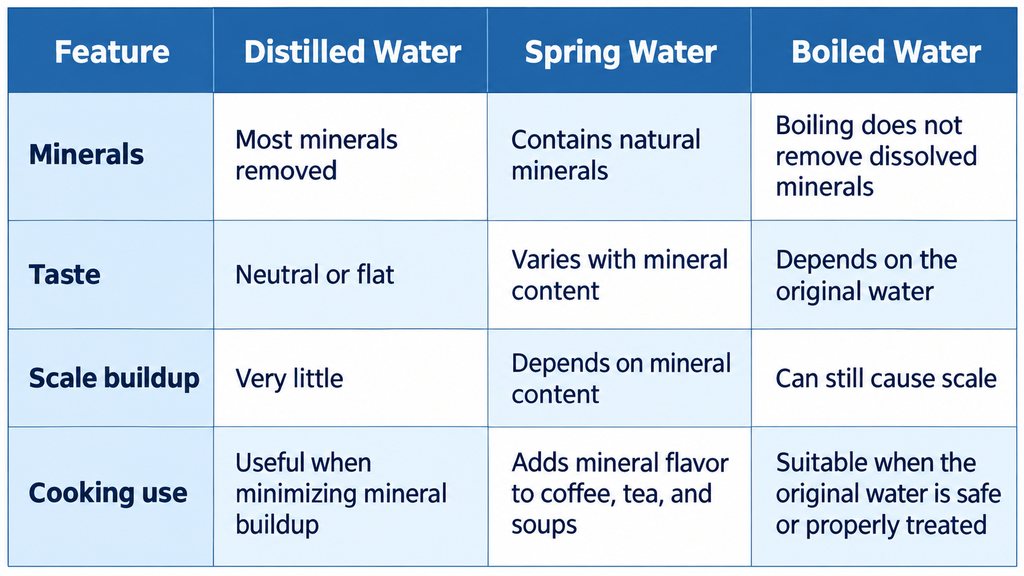
Spring water often tastes better in coffee, tea, and soups because its natural minerals give it a fresh, rounded taste. Distilled water is the better pick for anything that heats water over and over. If you enjoy that fresh taste, spring water delivery is an easy way to keep it on hand.
Boiled water is another option for cooking, but boiling does not make it distilled. Its dissolved minerals remain, so taste and scale buildup depend on the original water.
What Is The Best Water To Cook With?
The best water for cooking depends on what you are making. Some jobs need minerals for flavor, and others need no minerals to keep appliances clean. Here are the best choices for common kitchen jobs:
Kitchen Job | Good Choice | Why |
Rice, pasta, and noodles | Distilled or spring | Little taste difference once salted |
Boiled eggs | Distilled or spring | No real difference |
Soups and stocks | Spring | Minerals add a little body and flavor |
Coffee and tea | Spring | Many people prefer the fuller taste |
Kettles, rice cookers, coffee makers, steam ovens | Distilled | Helps prevent mineral scale |
Ice | Either | Pick the taste you like best |
A simple rule covers most kitchens. Use spring water for drinks and soups, distilled water for appliances, and either one for everything else. Many homes keep both on hand in 5-gallon bottles. If you are new to these big jugs, our guide on how much a 5-gallon jug of water weighs explains what to expect when you lift or store one.
Conclusion
So, can you cook with distilled water? Yes, it is safe for everyday cooking. It keeps scale out of kettles and coffee makers, and it works well for rice, pasta, noodles, and eggs. The main downside is taste, since coffee, tea, and soup can taste flat. For those, spring water is often the better choice.
Tahoe Springs Water has delivered water to homes and offices in the Las Vegas valley since 1994. We offer both distilled and spring water, with free delivery and no long-term contract. New customers can get two 5-gallon bottles delivered free. Call 702-433-4545 or start water delivery online.
FAQs
Yes. Distilled water is safe for coffee, tea, and other drinks. Many people find coffee and tea taste a little flatter with it, since it has no minerals to add flavor.
Spring water is a good choice for coffee and tea because its natural minerals give a fresher taste. Distilled water still works if you like a very clean, neutral flavor.
Yes. Rice cooks the same way in distilled water. Season it as usual and you will not notice much difference. It also keeps your rice cooker free of scale.
Yes. Pasta and noodles cook the same in distilled water. Salt the water as you normally would, since the seasoning matters more than the type of water.
Yes. Eggs boil the same way in distilled water, and the shell keeps the water away from the egg. Your pot also stays free of white mineral spots.