

Blog
What Ingredients Are in Red Bull?
updated: 06/03/2026
Red Bull is one of the most popular energy drinks in the world. Millions of people drink it for a quick energy boost, better focus, and improved alertness. But what exactly is inside a can of Red Bull?
In this guide, Tahoe Spring Water will explain the main Red Bull ingredients, caffeine content, nutrition facts, and the differences between regular and sugar-free versions.
Main Ingredients in Red Bull
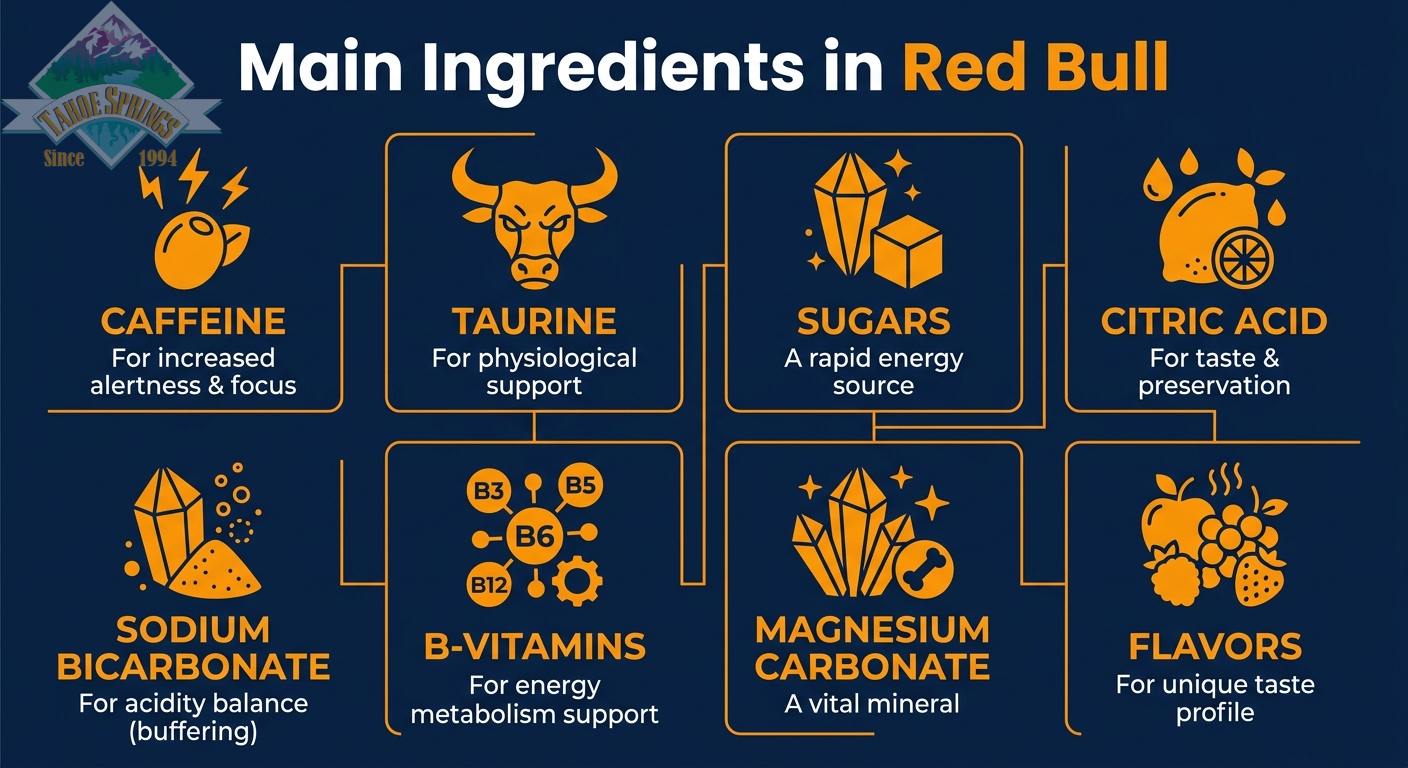
Red Bull is a popular energy drink that helps you feel awake and alert. It contains a specific mix of ingredients that boost your focus, provide vitamins, and create its unique taste. To help you understand what is inside each can, below are the main ingredients:
Caffeine
Caffeine acts as a stimulant that helps you stay alert. It reduces tiredness by blocking signals in your brain. One 8.4 oz can contains 80 mg of caffeine, which matches the amount in a cup of coffee. This ingredient provides the main boost you feel.
Taurine
Taurine is an amino acid naturally found in the human body and many foods. Red Bull contains 1000 mg of taurine per 8.4 oz can. Taurine may help:
- Support nerve function
- Maintain hydration balance
- Support muscle performance
Despite common myths, taurine in energy drinks is not harmful when consumed in moderation.
Sugars
Red Bull uses sucrose and glucose to provide quick fuel. Your body absorbs these sugars fast to give you an immediate boost. They also provide the sweet taste of the drink. These ingredients supply the calories you burn during activity.
Citric Acid
Citric acid gives the drink a tart, tangy flavor. It also acts as a preservative to keep the drink fresh inside the can. It helps balance the overall taste profile. Food companies often use it to improve the quality of beverages.
Sodium Bicarbonate
Sodium bicarbonate, or baking soda, manages the acidity of the drink. It keeps the flavor smooth and refreshing. It also helps the ingredients stay balanced. This component prevents the drink from taste too sour.
B-Vitamins
Red Bull includes several B vitamins because they help the body convert food into energy. The drink contains:
- Vitamin B3 (Niacin)
- Vitamin B5 (Pantothenic Acid)
- Vitamin B6
- Vitamin B12
These vitamins support:
- Energy metabolism
- Brain function
- Nervous system health
Magnesium Carbonate
This mineral keeps the drink stable and prevents the ingredients from separating. It also assists your body as it creates energy. It ensures you receive a high-quality product. This substance keeps the mixture consistent until you open the can.
Flavors
Red Bull uses natural and artificial flavors to create its unique taste. These ingredients make the drink enjoyable to consume. They ensure you taste the same flavor in every can. They help define the signature profile of the brand.
Sugar-Free Red Bull Ingredients
Sugar-Free Red Bull gives you the same energy boost as the regular drink, but it contains no sugar or calories. It uses artificial sweeteners instead of sugar to create a sweet taste. Below is a table that shows the main ingredients in an 8.4 fl oz can of Sugar-Free Red Bull:
| Ingredient | Amount (8.4 oz Can) |
| Caffeine | 80 mg |
| Taurine | 1,000 mg |
| Aspartame | Varies |
| Acesulfame K | Varies |
| Vitamin B3 (Niacin) | 100% DV |
| Vitamin B5 | 340% DV |
| Vitamin B6 | 200% DV |
| Vitamin B12 | 80% DV |
Sugar-Free vs. Regular Red Bull
The main difference between Sugar-Free and Regular Red Bull is the sugar content. Regular Red Bull contains sugar and calories that provide quick energy, while Sugar-Free Red Bull uses artificial sweeteners like aspartame and acesulfame K to create a sweet taste without added sugar.
Both versions contain the same amount of caffeine, taurine, and B vitamins, so they offer a similar energy boost. People who want fewer calories or lower sugar intake often choose Sugar-Free Red Bull.
Is Red Bull Bad for You?
Red Bull can be safe for most healthy adults when consumed in moderation. However, drinking too much caffeine or sugar may cause side effects. Possible side effects include:
- Increased heart rate
- Trouble sleeping
- Anxiety or jitters
- Headaches
- Dehydration
People who should limit or avoid energy drinks include:
- Children and teenagers
- Pregnant women
- People sensitive to caffeine
- Individuals with heart conditions
Conclusion
Red Bull contains a combination of caffeine, taurine, sugars, B vitamins, and carbonation to help increase energy and focus. Whether you choose the original, sugar-free, or flavored editions, understanding the ingredients can help you make informed decisions about your caffeine intake. Moderation and proper hydration are important when consuming any energy drink.
Tahoe Springs Water also offers energy drink options for homes, offices, gyms, and businesses. Call us at +1 702-433-4545 to learn more about our beverage delivery services in Las Vegas.
FAQs
Does Red Bull Tropical contain alcohol?
No, Red Bull Tropical does not contain alcohol because Red Bull sells it as a non-alcoholic energy drink with tropical fruit flavors and caffeine.
Is Red Bull Tropical sugar-free?
No, Red Bull Tropical contains sugar that adds sweetness, supports the flavor, and provides quick energy.
Is Red Bull suitable for vegetarians and vegans?
Yes, Red Bull suits vegetarians and vegans because it does not include meat, dairy, or other animal-based ingredients.
Does Sugar-Free Red Bull contain carbs?
Yes, Sugar-Free Red Bull contains a very small amount of carbs, but it has much fewer carbs and calories than regular Red Bull.
Can I drink Red Bull every day?
You can drink Red Bull in moderation every day, but too much caffeine may cause sleep issues, nervousness, or a fast heartbeat.
Is the caffeine content different from regular Red Bull?
No, Sugar-Free Red Bull contains the same amount of caffeine as regular Red Bull, with about 80 mg in an 8.4 oz can.