
Blog
Does Spring Water Have Electrolytes?
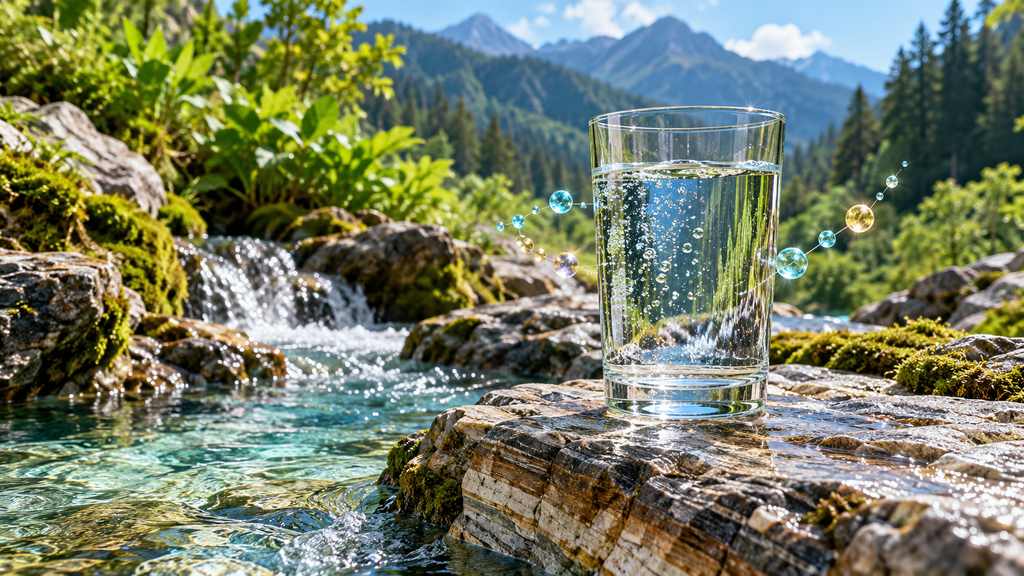
Many people who drink spring water every day wonder what is really in it. If you have ever asked, does spring water have electrolytes, the short answer is yes. It naturally holds small amounts of minerals such as calcium, magnesium, potassium, and sodium. The amounts are usually low and depend on where the water comes from, so spring water supports everyday hydration but does not replace an electrolyte drink when you sweat a lot. In this guide, Tahoe Springs Water explains what electrolytes are, how they get into spring water, and when plain water is enough for your body.
Electrolytes in Spring Water at a Glance
Here is a quick look at the electrolytes in spring water and what each one does in your body:
Electrolyte | Found in spring water? | What it does in your body |
Calcium | Yes, in small amounts | Helps keep bones and teeth strong |
Magnesium | Yes, in small amounts | Helps muscles, nerves, and the heart work |
Potassium | Yes, in small amounts | Helps cells, the heart, and muscles work |
Sodium | Yes, in small amounts | Helps control fluid and supports nerves and muscles |
What Are Electrolytes and Why Do They Matter?
Electrolytes are minerals that carry a small electric charge when they mix with water or body fluids, such as blood. MedlinePlus, a service of the National Institutes of Health, explains that your body uses them every day to keep things running smoothly. The main electrolytes include sodium, potassium, calcium, magnesium, chloride, and bicarbonate. Together, they help:
- Keep the right amount of water in your body
- Carry nerve signals
- Help your muscles work, including your heart
- Move nutrients into cells and waste out of them
You get most of your electrolytes from the food you eat. Drinks add some too.
Does Spring Water Contain Electrolytes?
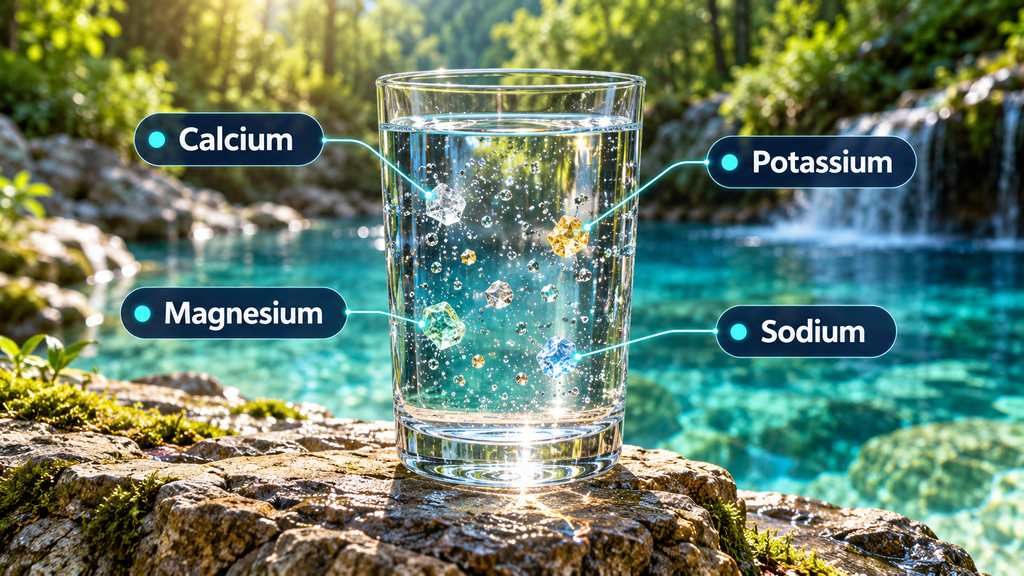
Yes, the electrolytes in spring water come from nature, not from a factory. Most spring water holds four main ones:
- Calcium
- Magnesium
- Potassium
- Sodium
The amounts are usually small. They also change a lot from one spring to another, because each source flows through different rock and soil. If you want to know what is in your water, check the brand's water quality report.
Look for the numbers next to calcium, magnesium, sodium, and potassium. You may also see total dissolved solids, or TDS. This number shows the total amount of minerals in the water, often listed in parts per million (ppm). A higher TDS means more minerals.
How Spring Water Gets Its Electrolytes
Spring water starts as rain and snow. It soaks into the ground and moves slowly through rock and soil. On the way, it picks up small amounts of minerals, such as calcium and magnesium. Then it rises back up at a spring.
The FDA has clear rules for spring water. The water must come from an underground source that flows to the surface on its own. That is why spring water keeps its natural minerals.
Benefits of Electrolytes in Spring Water
The minerals in spring water are a small bonus, not a big source. Still, they offer a few simple benefits:
- They give the water a clean, pleasant taste that many people enjoy.
- They add a small amount of natural minerals to your day.
- A good taste can make it easier to drink enough water, which is the main goal.
The amounts of electrolytes in water are small compared with what you get from food. For most people, plain water is the best way to stay hydrated, as Mayo Clinic notes. Spring water does that job well, but it does not hydrate you better than other clean drinking water.
If you keep spring water at home in a large jug, our guide on How Much Does a 5-Gallon Jug of Water Weigh? explains what to expect when you lift one.
Comparing Spring Water to Other Beverages
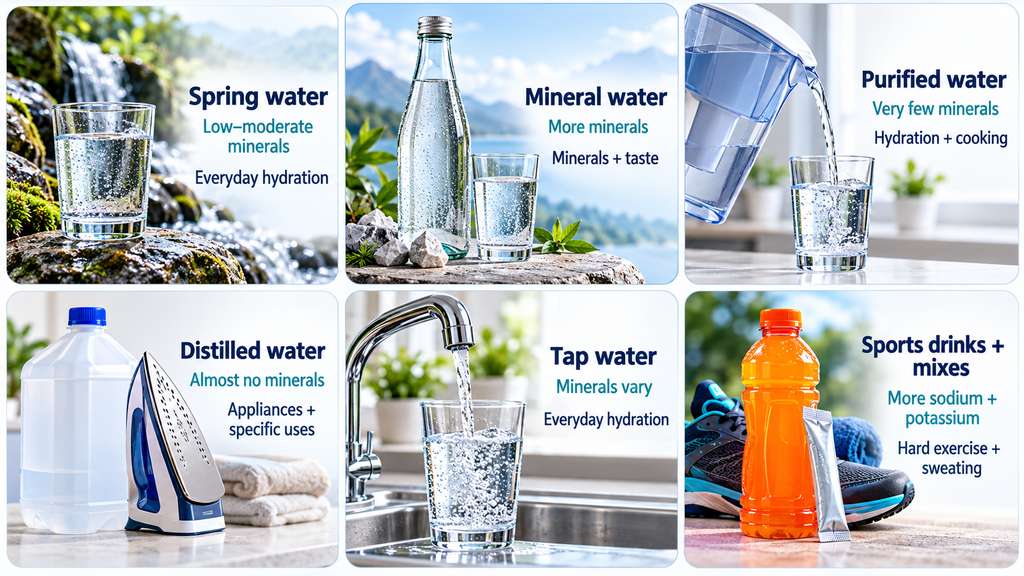
Not all water has the same mineral content. Some types keep their natural minerals, and others have most of them removed. Here is how spring water compares:
Drink | Electrolyte content | Best use |
Spring water | Low to moderate, natural; varies by source | Everyday hydration |
Mineral water | Higher; at least 250 ppm TDS by FDA definition | People who want more minerals or like the taste |
Purified water | Very low; most minerals removed | Everyday hydration, cooking, appliances |
Distilled water | Almost none | Appliances, medical devices, specific uses |
Tap water | Varies by city; Las Vegas water is hard, with calcium and magnesium | Everyday hydration |
Sports drinks and electrolyte mixes | Higher sodium and potassium; may contain sugar | Long or hard exercise, heavy sweating in heat |
So, what is electrolyte water? It is water with added minerals, such as sodium or potassium. Sports drinks work in a similar way, but many also contain sugar. If you are curious about water with almost no minerals, our guide on Can You Cook with Distilled Water explains how people use it at home.
When You May Need More Than Water
For most people, spring water and a normal diet cover daily needs. Added electrolytes may help in a few cases:
- Long or intense exercise
- Heavy sweating, especially during outdoor work in desert heat
- Long hours in the sun during a Las Vegas summer
The Southern Nevada Health District explains that heat exhaustion is the body's response to losing too much water and salt through sweat. It advises people to drink plenty of water at regular times when they spend time outdoors. If you have heart, kidney, or liver disease, or follow a low-salt diet, ask your doctor before you change what you drink.
Conclusion
So, does spring water have electrolytes? Yes. It holds small, natural amounts of calcium, magnesium, potassium, and sodium that come from the rock it flows through. For most people, that is enough for everyday hydration when paired with a normal diet. On days with long exercise or heavy sweating in the heat, you may want to add an electrolyte drink.
If you would like fresh spring water at home or at work, our team at Tahoe Springs Water has served the Las Vegas valley since 1994. We offer spring water delivery in Las Vegas and nearby areas, with free delivery and no long-term contract. To start spring water delivery, call us at 702-433-4545.
FAQs
Electrolyte levels that are too high or too low can affect how your muscles, nerves, and heart work. If you feel unwell after heavy sweating, vomiting, or diarrhea, see a doctor.
Electrolyte water can be good for you at the right times. It may help after long exercise or heavy sweating. For daily needs, most people do well with plain water and a balanced diet.
Spring water, mineral water, and tap water all contain some natural electrolytes. Purified and distilled water have most of their minerals removed.
Many electrolyte drinks add sugar and sodium you may not need. People with kidney, heart, or blood pressure conditions should ask a doctor before using electrolyte supplements.
Not for most people. Plain water works well for everyday hydration. Added electrolytes may help during long, hard exercise or heavy sweating in the heat.
Mineral water usually has the most. Under FDA rules, it must contain at least 250 ppm of total dissolved solids, so it often holds more minerals than spring water.